What is the Rotorcraft Collective?
The Rotorcraft Collective is an FAA and industry joint project focused on improving helicopter safety through short, practical, safety-focused educational videos.

The latest video features Matt Johnson, helicopter air ambulance pilot and FAA Designated Pilot Examiner, alongside Scott Minnick, lead aviation meteorologist at the National Weather Service‘s Aviation Weather Center in Kansas City.
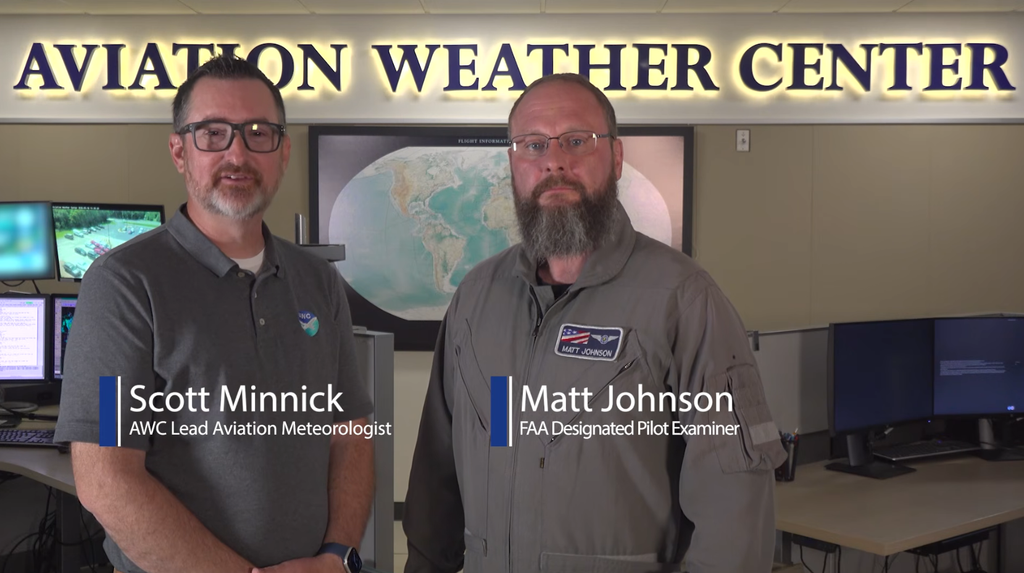
Better Forecasts are Hiding in Plain Sight
You’ve completed your weather briefing, checked the TAFs, and everything looks great for your afternoon flight.
Then you walk outside and see clouds building along your intended route.
What happened? Did the forecaster get it wrong?
Not necessarily!
As Matt and Scott explain, a TAF might not tell you the whole story. But there’s another valuable forecasting tool that many pilots overlook because Better Forecasts are Hiding in Plain Sight.
Limitations of a TAF
Terminal Aerodrome Forecasts (TAFs) are an important part of our weather briefings, but their geographic coverage is rather limited.
A TAF covers an area within 5 statute miles of the airport.
Even when the forecast includes weather in the vicinity (VC), that refers to certain phenomena expected between 5 and 10 statute miles from the airport.
That’s not much coverage when you’re planning a cross-country flight, particularly in a helicopter where we frequently operate at lower altitudes and may encounter low-level localized weather conditions.
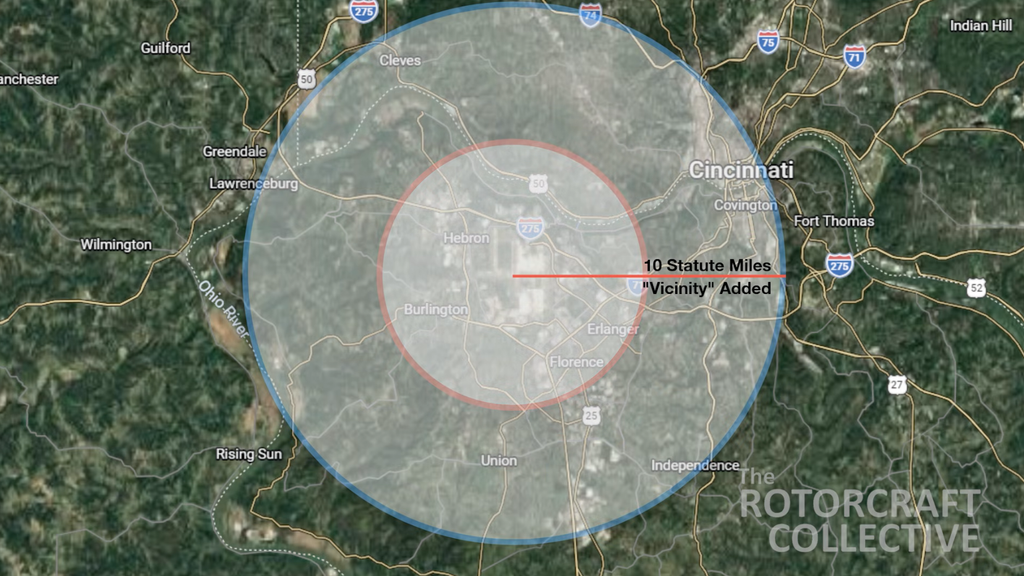
Other tools, including the Graphical Forecasts for Aviation (GFA) and hourly weather observations, can help fill in some of those gaps.
But there’s another resource worth adding to your weather briefing…
Area Forecast Discussions
The Area Forecast Discussion (AFD) provides insight into what the forecasters are actually thinking.
Unlike a coded TAF, the AFD is written in plain English and explains the scientific reasoning behind the forecast.
It also provides information about forecast confidence, uncertainty, and possible weather scenarios that may not be included in other weather products.
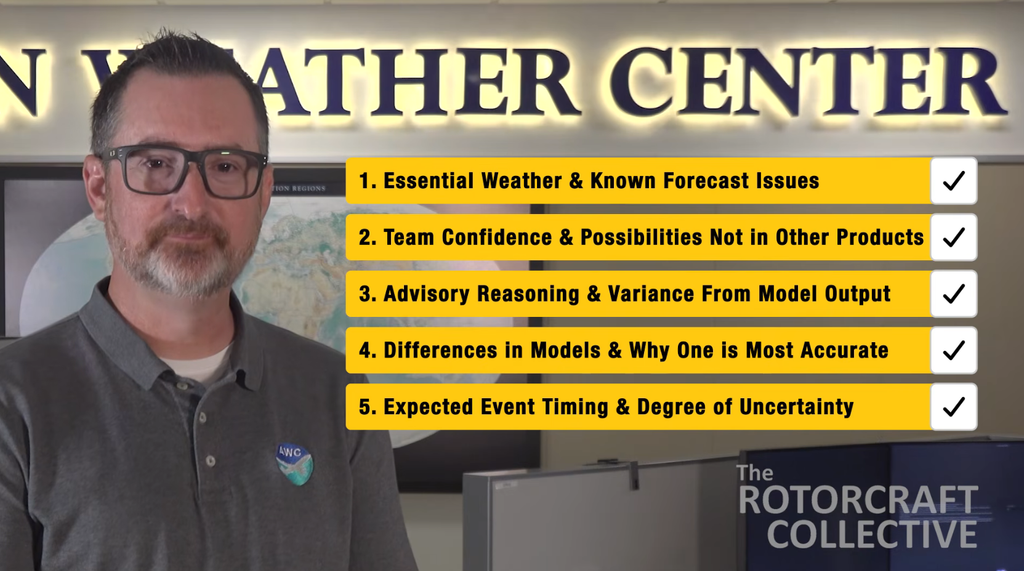
As Matt and Scott explain, AFDs can help pilots understand:
- Forecast confidence: How certain are meteorologists about the expected conditions?
- Potential hazards: Are there weather concerns that might not appear in the TAF?
- Forecast models: Do different models disagree, and which does the forecaster consider more reliable?
- Timing: When are conditions expected to change, and how confident is that timing?
- Forecast reasoning: Why were certain conditions included or omitted in the TAF?
Low-Probability Weather
Some weather conditions have a relatively low probability of occurring and may not meet the criteria for inclusion in a TAF.
But the AFD can still discuss the possibility and explain the uncertainty surrounding their development.
“Because Area Forecast Discussions (AFDs) are intended to be more in-depth, even weather conditions that have a low probability – like those pop-up thunderstorms – can be included, whereas the same condition might be excluded from a TAF.”
Scott Minnick – Rotorcraft Collective
Where to Find Area Forecast Discussions
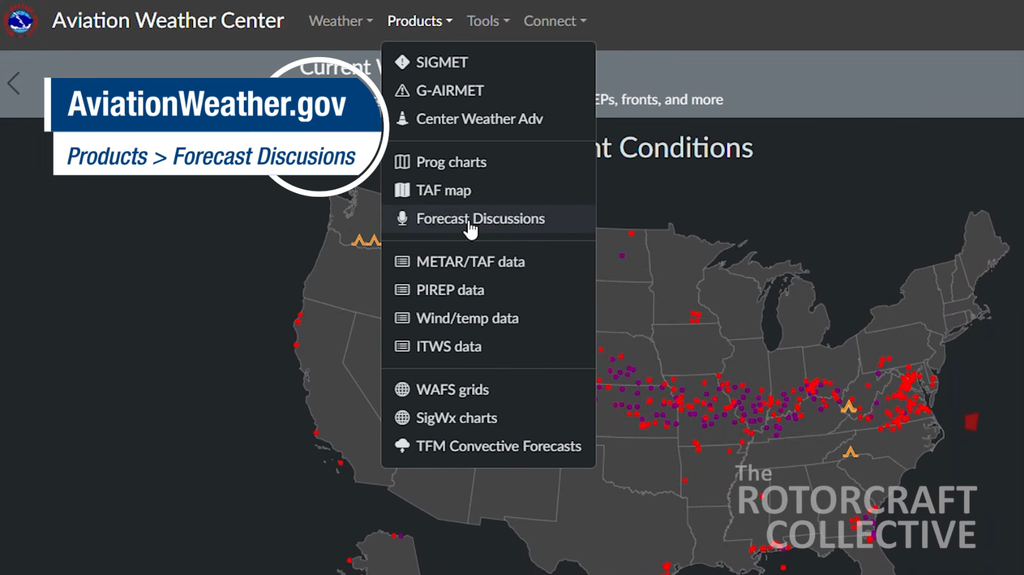
AviationWeather.gov
Visit AviationWeather.gov, open the Products menu, and select Forecast Discussions.
Select your forecast region to view the aviation discussion. You can also access the complete discussion for additional weather context.
ForeFlight (Web or App Versions)
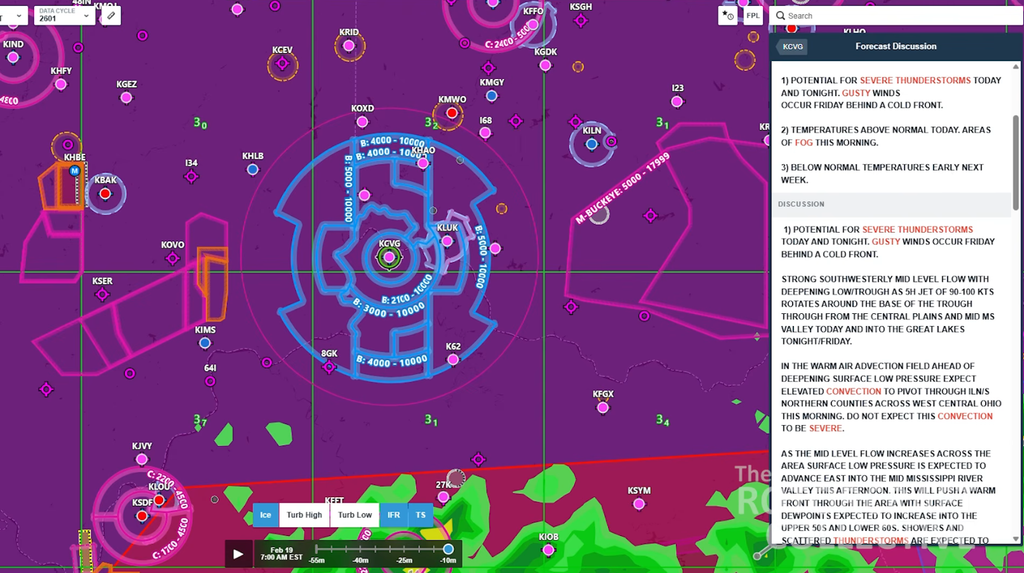
You can also find AFDs within ForeFlight:
- Select an airport.
- Open the Weather tab.
- Select TAF.
- Select Forecast Discussion.
ForeFlight also highlights certain hazardous weather terms, including thunderstorms and fog, in red, making them easier to identify.
Another Tool for Better Weather Decision-Making
Area Forecast Discussions don’t replace METARs, TAFs, graphical forecasts, or a complete weather briefing.
But they can provide something those products don’t always communicate clearly: the reasoning and uncertainty behind the forecast.
That’s particularly useful when conditions are marginal, changing rapidly, or affected by localized weather.
This also ties in nicely with another recent Rotorcraft Collective video, Beware of the Green Dot Syndrome, which highlights the danger of relying on simplified weather information without looking deeper.
The takeaway from both videos is similar: don’t stop at the METAR & TAF. Take the time to understand what they might not be showing you.
Video Links & Subscribe
Another excellent safety resource from the Rotorcraft Collective team, and one I’d encourage instructors to share with their students.
Watch Better Forecasts are Hiding in Plain Sight and check out the complete Rotorcraft Collective YouTube Playlist.
I also recommend subscribing to the FAA YouTube channel (@FAAnews) to be notified of new Rotorcraft Collective videos.
Feedback
Do you already use Area Forecast Discussions as part of your weather briefings? Have you ever found something in an AFD that changed your decision to fly?
Let us know in the comments below!