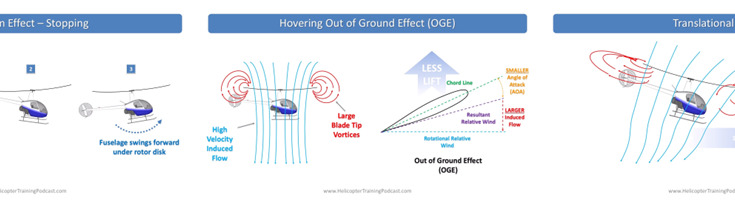
There a a variety of aerodynamic factors at play just in a hover:
- Induced Flow
- Out of Ground Effect (OGE or HOGE)
- In Ground Effect (IGE or HIGE)
- Torque Reaction
- Translating Tendency or Drift
- Translational Lift & Thrust
- Vertical and Horizontal Stabilizers
- Pendulum Effect
- Wind Effects
Video
The video below is a excerpt from the Helicopter Training Podcast Episode 2 – How to Hover a Helicopter:
Resources
- FAA Helicopter Flying Handbook Chapter 2 – Aerodynamics of Flight
- FAA Pilot’s Handbook of Aeronautical Knowledge Chapter 5 – Aerodynamics of Flight
Related Videos
Airfoils
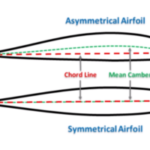
An airfoil is any surface that produces a useful aerodynamic force. Here are some examples of uses of those aerodynamic forces: Lift
Negative Lift
Stability
Thrust
Control
When talking about airfoils it is important to know the technical ...
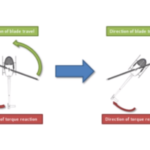
Helicopter Torque
A basic rule of Newtonian physics is that for every action there is an equal and opposite reaction . So when you have the action of the rotation of the main rotor blades of a helicopter - the reaction will cause the body of the helicopter to move in...
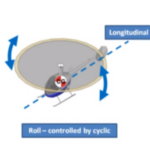
Three Axes of Flight
When maneuvering in the air, the helicopter moves around the Three Axes of Flight which all act through the helicopter's center of gravity (CG): Longitudinal Axis (Roll or Bank)
Lateral Axis (Pitch)
Vertical Axis (Yaw)
Video
The video below...